We Can Have It All. But Do We Want It?
For decades, women fought for the right to build careers, earn their own money, hold positions of power, and create identities beyond marriage and motherhood.
That fight mattered. It still matters.
But somewhere along the way, “You can be anything” quietly became “You should be everything.”
Have the career. Raise the children. Keep the marriage alive. Maintain your friendships. Volunteer at school. Remember spirit week. Schedule the dentist appointments. Pack the lunches. Exercise. Make healthy meals. Be emotionally available. Practice self-care. Have sex. Build a retirement account. And please look reasonably well-rested while doing it.
We can have it all.
But at some point, usually somewhere around burnout, we have to ask ourselves whether we actually want all of it.
Burnout has a way of forcing questions we might otherwise avoid.
How long can I keep doing this?
What is all of this costing me?
Why am I working so hard to maintain a life I am too exhausted to enjoy?
And the hardest one: Do I even want this anymore?
We often talk about burnout as though it’s something to recover from so we can get back to being productive. Take a vacation. Set better boundaries. Get more sleep. Practice self-care. Recharge so you can return to the exact same life that drained you.
But sometimes burnout is not asking us to rest and return.
Sometimes it is asking us to reconsider.
Maybe the job that once made us feel successful now leaves us depleted. Maybe the promotion we were supposed to want comes with responsibilities we no longer want to carry. Maybe the pace we once tolerated became impossible after having children. Maybe we’ve changed, but our definition of success hasn’t changed with us.
Burnout can be painful, but it can also be clarifying.
It shows us what is no longer sustainable.
Maybe having it all isn’t truly freedom.
Maybe freedom is being able to decide what “all” means to you.
We spent generations telling women they deserved a seat at the table. We forgot to tell them they were allowed to get up from the damn table if they decided they didn’t want to sit there anymore.
A woman can announce that she’s leaving her corporate job to start a company, and we call her brave. She’s taking a risk. Chasing a dream. Betting on herself.
But if she says she’s leaving that same job because she wants to stay home with her children, the response is often different. You hear the whispers around the water cooler.
What about your career?
What about your degree?
What about your independence?
Aren’t you worried you’ll regret it?
As though caring for her children represents a failure to fulfill her potential instead of a decision about how she wants to spend this particular season of her life.
Of course, not every mother wants to stay home. Many women genuinely love their work. Their careers provide meaning, connection, financial security, and an identity that matters deeply to them. Wanting a career does not make a woman less devoted to her children.
But wanting to leave one does not make her less intelligent, driven, or capable.
There is no version of motherhood in which women are not expected to explain themselves.
If she works long hours, people wonder how she can stand being away from her children and is it worth “missing out”.
If she stays home, people wonder why she gave up everything she worked “so hard” for.
If she works part-time, she may be treated as though she’s not fully committed to either role.
If she takes a less demanding position, people wonder why she isn’t doing more with her abilities.
Whatever she chooses, someone is waiting to ask whether she feels guilty about it.
Burnout complicates these choices even further because scaling back can feel like admitting we couldn’t handle it.
We’re encouraged to be strong, capable, and resilient. We tell ourselves that other women manage demanding careers and motherhood, so we should be able to do it, too. When we can’t maintain the pace without sacrificing our health, relationships, or sanity, we often blame ourselves.
Maybe I need to be more organized.
Maybe I need better boundaries.
Maybe I need to stop complaining.
Maybe I need to try harder.
But scaling back is not proof that you weren’t capable of doing more.
Sometimes it’s proof that you finally became honest about what doing more was costing you.
That might mean leaving a corporate career to stay home. But that choice is not available to every mother.
For a single mother, a mother carrying the family’s health insurance, or anyone living paycheck to paycheck, leaving a job may not be an option at all. Some women are not deciding between corporate life and staying home. They are deciding which bills can wait until the next paycheck.
Any conversation about women choosing what they want has to make room for the women whose choices are limited by financial reality.
Otherwise, “Do what is best for your family” becomes another impossible expectation placed on mothers who are already doing the best they can with what they have.
Scaling back does not always mean quitting.
It might mean turning down a promotion.
It might mean leaving management for a role with fewer demands.
It might mean working part-time.
It might mean taking a predictable job instead of a prestigious one.
It might mean staying in a position you’re technically overqualified for because you can clock out at 4:00 and actually be done.
It might mean keeping a monotonous job because it provides the paycheck and health insurance your family needs without consuming every part of you.
Sometimes we can’t choose whether we work - especially in this economy. But we may be able to reconsider how much of ourselves we allow work to take.
And we judge those choices, too.
If a woman has a master’s degree, why isn’t she using it more?
If she used to be a director, why would she accept a coordinator position?
If she could make more money, why wouldn’t she?
We call it wasted potential.
But what if she is using that potential somewhere else?
What if the less demanding job means she has something left when she gets home?
What if she wants to make dinner without answering emails?
What if she wants to attend the field trip?
What if she wants enough energy to listen when her child tells a seven-minute story that could have taken 30 seconds?
What if she simply does not give a shit about becoming vice president anymore?
There is nothing inherently more evolved about becoming the CEO than deciding you do not want to be the CEO.
There is nothing less ambitious about saying, “I need to earn a living, but I do not need my job to be the most important thing about me.”
And there is no shame in working full-time because that is what keeps your family secure, even if you would choose something different under different circumstances.
Burnout does not always mean we’re doing the wrong thing.
Sometimes we love our work and still feel exhausted by the number of roles we’re expected to hold. Sometimes the problem isn’t the career itself. It’s trying to maintain the career while continuing to carry most of the childcare, household labor, scheduling, emotional support, and invisible planning at home.
Scaling back may help one woman. Another may need a partner who takes equal responsibility. Someone else may need affordable childcare, a flexible schedule, paid leave, better leadership, or a workplace that does not treat motherhood as an inconvenience.
We should not have to shrink our lives simply because the systems around us refuse to support them.
At the same time, we should not have to keep expanding our lives just to prove that we can.
Sometimes success is building the career you always wanted.
Sometimes success is admitting that the career you worked so hard to build is no longer the life you want.
Sometimes success is staying home.
Sometimes it’s stepping down.
Sometimes it’s keeping the boring job with the good hours.
Sometimes it’s doing what needs to be done right now while acknowledging that it’s not what you would choose if more options were available.
And sometimes success is recognizing burnout before it takes everything from you.
Women fought for access to education, careers, leadership, financial independence, and rooms we were once forbidden from entering. Honoring that fight does not mean every woman must pursue the most demanding version of professional success available to her.
Maybe the goal was never to prove that women could do everything men could do while continuing to do everything women had traditionally done.
Maybe the goal was supposed to be choice.
Real choice. Choice that considers our financial realities, our families, our health, our changing identities, and the lives we actually want to live.
So perhaps the question is no longer whether women can have it all.
You better believe we can.
The better questions are harder.
What is this version of success costing me?
What do I actually want?
What am I doing because it matters to me, and what am I doing because I have been taught that successful women are supposed to want it?
What am I afraid my choices will say about me?
If no one were impressed or disappointed by my decision, what would I choose?
You are allowed to want the career.
You are allowed to want motherhood and the career.
You are allowed to stay home.
You are allowed to work because your family depends on your income.
You are allowed to choose the less impressive job.
You are allowed to step down, step away, come back, or change your mind.
You are allowed to decide that the version of success you once wanted no longer fits the woman you have become.
Burnout does not always mean you need to become better at carrying everything.
Sometimes it means you need permission to put something down.
Feminism should not mean that women finally earned the right to work themselves into the fucking ground.
It should mean we earned the right to choose.
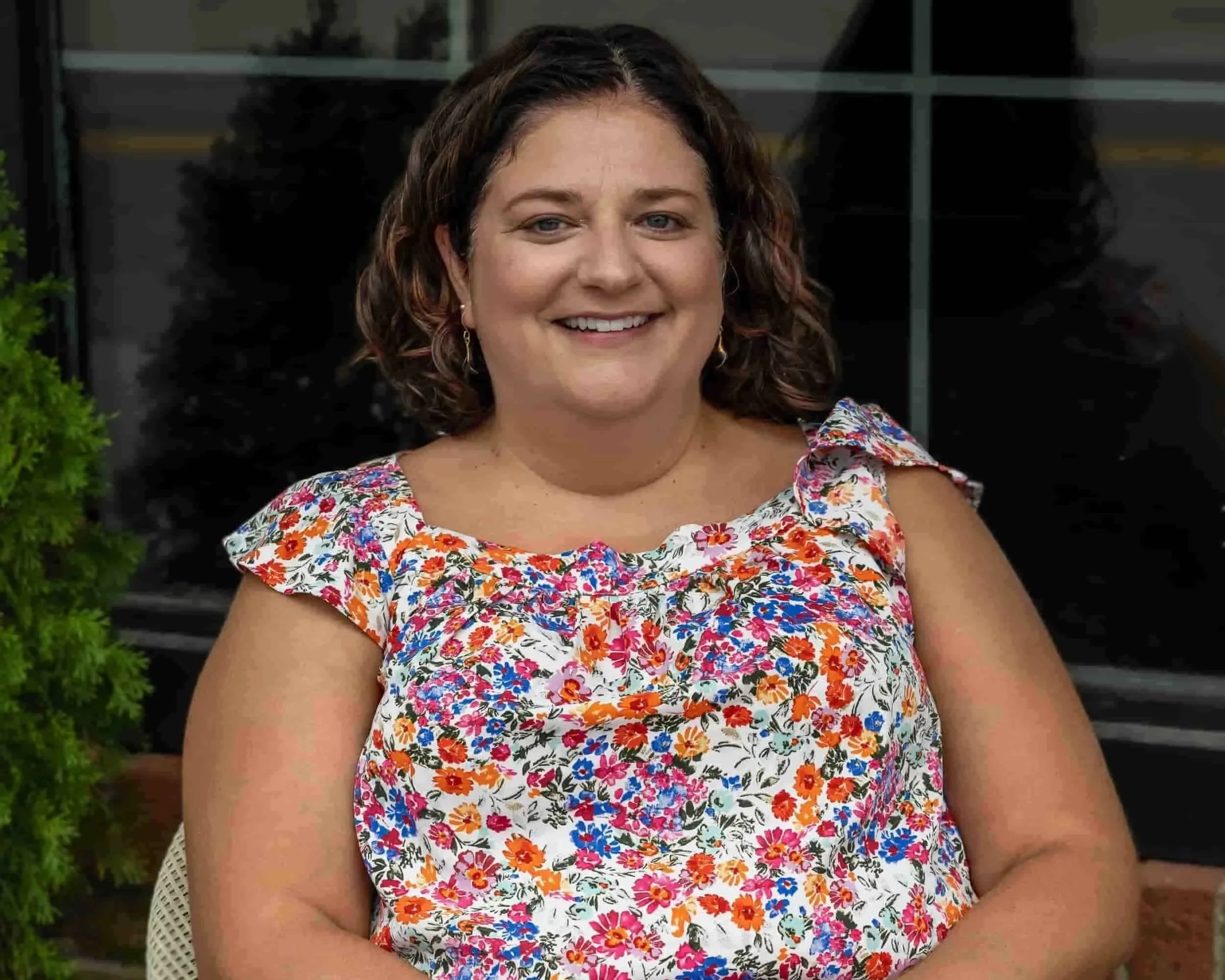
Hello! I’m MacKenzie.
I’m a Licensed Clinical Social Worker and owner of Follow Your Arrow Counseling, LLC and Middle Path Wellness Collective, LLC. I specialize in working with Moms and who are stressed out, overwhelmed and not taking care of themselves as well as they take care of everyone else. I call this phase of life the “Mother Load.”
Being a Mom is hard. There are some days I really don’t like it, to be honest. Thank goodness there are other moments when my daughter tells me I’m her best friend that make up for all the crappy days.
Join me as we walk this road of motherhood together. It truly takes a village to raise our kids and maintain our sanity.