Stop Treating Your Needs Like They’re Optional
The grind. The hustle. The drive.
Our society has an insatiable appetite for the next best thing. Do more. Be more. Accomplish more. The only issue is that our bodies and minds can’t always keep up, eventually leading us straight into burnout.
So often I hear clients share their need for a pause button, or just one more hour in the day. But what would you really do with that extra time?
See, burnout doesn’t only stem from a need to achieve. More often, burnout is the result of unmet needs, lack of resources, poor boundaries, and environments that continuously ask more of us than we have to give. We could be given all of the extra time in the world, but if our environment continues to work against us, what good will all of that time actually do?
Any get-help-quick site or Reddit thread will tell you the same thing:
Burnt out? Do these 7 things to get your life back on track.
More often than not, it’s a regurgitation of the same few tips.
Get plenty of sleep! Prioritize your self-care! Say NO! Meditate. Workout. Just don’t, duh.
Don’t get me wrong. These are all great interventions for managing the symptoms of burnout, but they aren’t necessarily addressing the fundamental issues that get us here in the first place.
You can’t meditate your way out of being chronically overworked.
You can’t set a bedtime that fixes financial stress.
And a bubble bath isn’t going to make an unsustainable situation suddenly sustainable.
The cost of living crisis and increasing food insecurity don’t exactly make “taking time for yourself” an easy decision. So many of us are forced to choose between rest and making our next rent payment. Others are balancing work, caregiving, relationships, financial stress, and responsibilities that simply cannot be solved by learning to say no more often.
You deserve better. We all do.
If our goal is to address burnout at its roots rather than simply managing the symptoms, we have to understand the difference between what life is failing to provide us and what we are prioritizing within the things we can control.
An effective place to start is by identifying your core needs and determining what is being met and what is going unmet. Maslow’s Hierarchy of Needs can actually be a helpful visual aid for this.
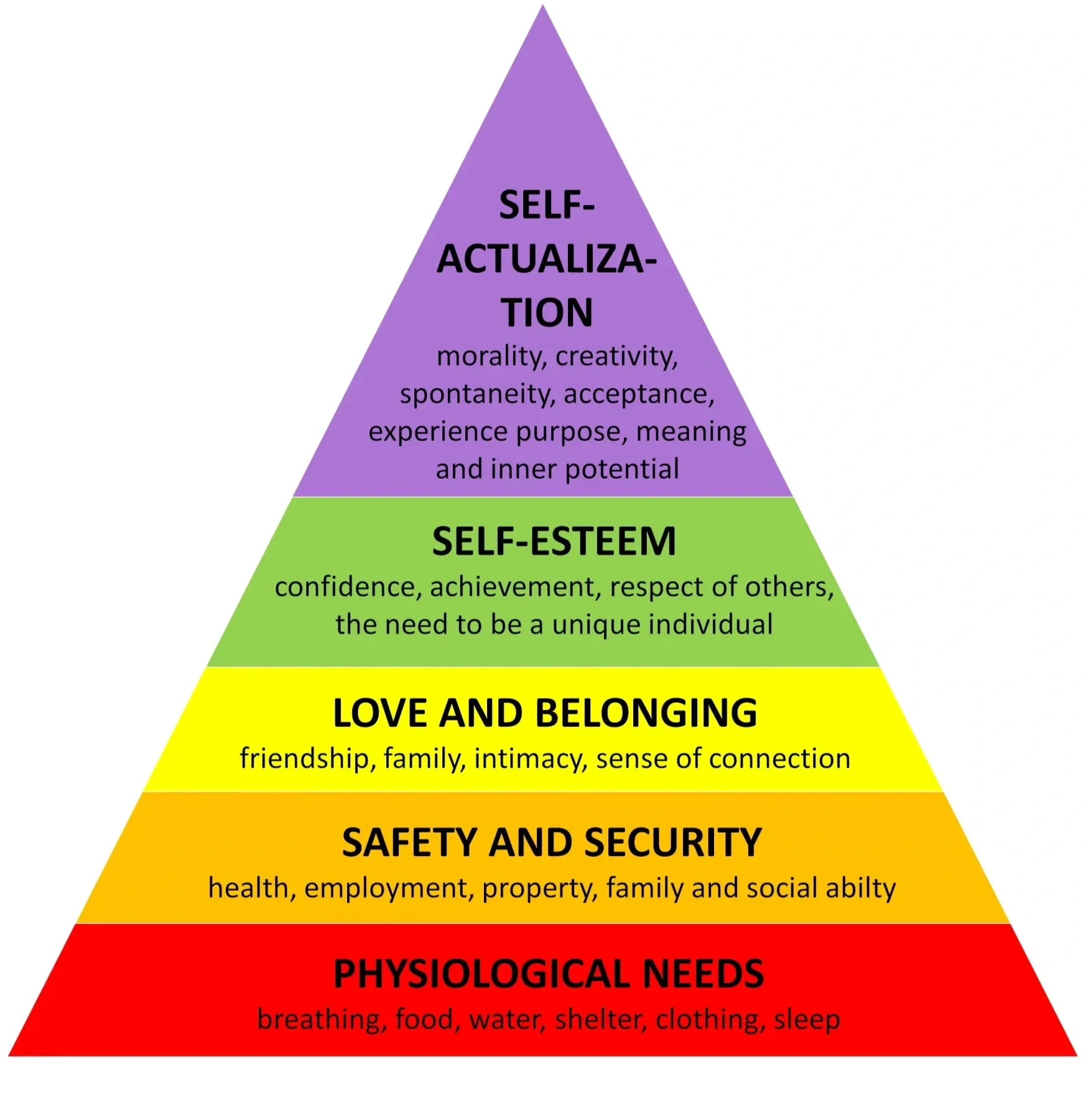
Once you identify the unmet needs, get curious about them.
What’s getting in the way?
Is this something outside of your control, like finances, lack of support, your work environment, or circumstances that simply don’t have an easy solution right now?
Or is there something within your control that continues to work against the need?
Maybe you need stronger boundaries, but you also want to keep everyone happy.
Maybe you need rest, but you feel guilty when you aren’t being productive.
Maybe you need support, but you’ve convinced yourself that asking for help means you aren’t capable.
Maybe you need space, but you’re afraid someone will be disappointed if you take it.
This is where our wants can get complicated.
Sometimes what we think we want isn’t really about us at all. It’s about avoiding discomfort, keeping the peace, meeting someone else’s expectations, or maintaining the version of ourselves we think other people need us to be.
And when our choices are consistently based on the satisfaction and expectations of everyone around us rather than our own needs, we gather all of the ingredients needed for burnout.
Determining whether your wants are actually yours versus the wants of those around you is no easy task. It takes an immense amount of courage and time to begin living your life as your own.
Knowing what you know now, this probably feels like exactly the kind of endeavor you’d like to shove in a closet until the next time it pops up.
Honestly, I wouldn’t blame you.
I would challenge you, though, to choose your hard.
Because continuing the cycle of burnout is hard.
Disappointing people is hard.
Setting boundaries is hard.
Admitting that something in your life isn’t working anymore is hard.
Changing it can be hard, too.
The question isn’t how to make life completely comfortable. The question is which hard moves you closer to a life that actually feels like yours.
You don’t have to overhaul your entire life tomorrow. Start by noticing where your needs are going unmet and getting curious about why.
Then ask yourself one question:
What would change if I stopped treating my needs like they were optional?

Sarah Rinker is a Provisionally Licensed Professional Counselor in the state of Missouri. She see clients in person in St. Charles and virtually throughout the state of Missouri.
“I open my doors to clients from all walks of life, but I do offer areas of expertise for those in need of specialized care. These areas include those experiencing grief relating to parent loss, hospice and long term care, and adult children of alcoholics. Additional areas include, career planning, couples care, pre-martial counseling, and LGBTQIA support.”